HDD UltraBits


Your Price From $286.34
Part #: BBUC
This item is in stock
This item is over 150lb and must be shipped with Freight.
Get this as early as tomorrow if ordered before 3pm PST. More Shipping Info

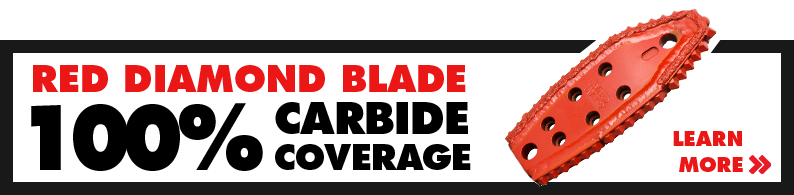
This is the MVP of our fleet of bits & blades. Ultra Bit 3 is an outstanding all-around ground solution with excellent steering and incredible durability thanks to its large welded carbide blocks and contoured steer surface with chunky carbide wear surface.

Product Features
  • Ideal for hard, compact soil and gravel
  • Conical carbide cutters make this an aggressive bit
  • Chunky carbide hardfacing the entire length of the blade for maximum longevity
  • Low-profile, tapered design to ­minimize torque stealing drag

FREQUENTLY ASKED QUESTIONS

What is the UltraBit directional blade used for?

Short Answer: The UltraBit directional blade is used for aggressive steering and cutting in hard, compact soils and gravel. Correct use: UltraBits are designed for HDD pilot bores where strong steering response and durability are required to maintain control in compact formations. The contoured steer surface helps the blade react quickly to directional inputs while staying stable downhole. Technical details: Large welded conical carbide cutters and chunky carbide hardfacing along the full blade length provide long service life and consistent cutting performance while the low-profile tapered design helps minimize torque-stealing drag. Incorrect use includes: running the blade in extremely soft or flowing soils where aggressive carbide engagement is unnecessary. Incorrect use can introduce greater risk of over-steering, excess torque, or inefficient drilling.

What is the UltraBit directional blade compatible with?

Short Answer: The UltraBit directional blade is compatible with bolt-on directional blade housings and bit bodies that match the blade’s bolt pattern and size. Correct use: UltraBits should be installed on compatible bolt-on housings or bit bodies with matching bolt count and bolt size to ensure secure attachment and predictable steering response. Technical details: Compatibility is determined by bolt pattern, bolt size, and blade size rather than thread type. UltraBits are not designed for threadless connection systems. Incorrect use includes: forcing the blade onto mismatched bolt patterns or incompatible housings. Incorrect use can introduce greater risk of loosening, misalignment, or premature wear.

What ground conditions are UltraBits best suited for?

Short Answer: UltraBits are best suited for hard, compact soil and gravel. Correct use: This blade should be used in formations where durability and aggressive cutting are needed to maintain steering control through dense or abrasive ground. Technical details: Conical carbide cutters deliver strong penetration while the low-profile tapered body reduces drag and helps manage torque in difficult soils. Chunky carbide hardfacing protects high-wear areas for extended service life. Incorrect use includes: running the blade in extremely soft or fluid soils where aggressive carbide cutting is unnecessary. Incorrect use can introduce greater risk of inefficient cutting and excessive steering correction.

When should I use a directional blade, a bit, or a blade-reamer?

Short Answer: The choice between a directional blade, drill bit, or blade-reamer depends on ground hardness, steering requirements, and whether cutting or hole enlargement is the primary objective. Correct use: Directional blades are used for pilot bores in softer to mixed ground where steering response and low torque are critical. Drill bits are used when ground conditions are too hard or abrasive for a blade to cut efficiently and require aggressive carbide penetration. Blade-reamers are used when simultaneous cutting, mixing, and hole conditioning are needed, especially in unstable or transitioning soils. Technical details: Directional blades rely on steer-face geometry and carbide placement to guide the bore with minimal torque and drag. Drill bits concentrate carbide mass at the cutting face to penetrate cobbles, rock, or hard formations where blades may stall. Blade-reamers combine cutting structure with mixing and pumping features to stabilize the bore while enlarging or conditioning the hole. Incorrect use includes: running blades in rock where penetration is insufficient, using bits in soft soils where steering becomes inefficient, or using blade-reamers where a clean pilot bore is required. Incorrect use can introduce greater risk of poor steering control, excessive torque, or inefficient hole formation.