
We've detected you are outside the United States. Switch to our International site by clicking below
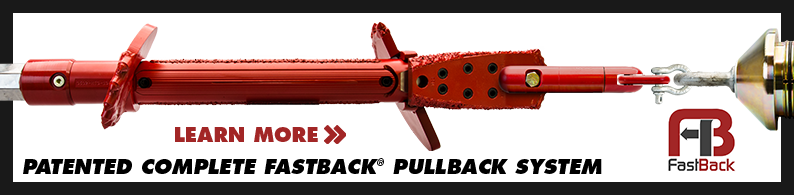
Tornado Jr. makes it possible to do direct pullback of pipes up to 4” diameter for shorter bores in good ground conditions. Part of our FastBack system, use Tornado Jr. to ream a hole without taking off the drill head.
| For Use In: Clay, Dirt, Hardpan, Sand, Sandstone, Shale |
Short Answer: A barrel stabilizer is not always required, but it is helpful on longer bores, larger diameter holes, or in unstable ground conditions.
Correct use: A reamer can be run without a barrel stabilizer on shorter bores where ground conditions are stable and hole integrity can be maintained. As bore length or diameter increases, adding a barrel stabilizer helps keep the reamer centered and the hole round without collapsing.
Technical details: A barrel stabilizer supports the reamer body during rotation and pullback, reducing the chance of wandering, over-enlargement, or uneven cutting. This becomes more important in softer or reactive soils where the bore is more likely to deform.
Incorrect use includes: Running larger-diameter or longer bores in unstable ground without stabilization can be risky for hole collapse or irregularity, uneven reaming, and increased pullback loads. Always consult manufacturer recommendations for additives and operation.
Short Answer: Pre-reaming is not always required, but stepping up in stages can be beneficial when bore length, final diameter, or ground instability increases.
Correct use: A single-pass ream can be appropriate on shorter bores with manageable diameter increases and stable ground. When moving to larger final diameters, running longer distances, or working in ground that is prone to swelling or collapse, staged reaming helps control the bore and manage the cut.
Technical details: Stepping up in stages reduces stress on the bore, improves cuttings transport, and can reduce spikes in torque and pullback load by avoiding a large diameter jump in one pass. This approach also helps maintain a rounder, more consistent hole in variable or reactive formations.
Incorrect use includes: Attempting a large diameter increase in a single pass on long bores or in unstable ground. This can introduce greater risk of poor hole quality, excessive pullback loads, stuck tooling, and bore collapse.
Short Answer: The choice between a directional blade, drill bit, or blade-reamer depends on ground hardness, steering requirements, and whether cutting or hole enlargement is the primary objective.
Correct use: Directional blades are used for pilot bores in softer to mixed ground where steering response and low torque are critical. Drill bits are used when ground conditions are too hard or abrasive for a blade to cut efficiently and require aggressive carbide penetration. Blade-reamers are used when simultaneous cutting, mixing, and hole conditioning are needed, especially in unstable or transitioning soils.
Technical details: Directional blades rely on steer-face geometry and carbide placement to guide the bore with minimal torque and drag. Drill bits concentrate carbide mass at the cutting face to penetrate cobbles, rock, or hard formations where blades may stall. Blade-reamers combine cutting structure with mixing and pumping features to stabilize the bore while enlarging or conditioning the hole.
Incorrect use includes: running blades in rock where penetration is insufficient, using bits in soft soils where steering becomes inefficient, or using blade-reamers where a clean pilot bore is required. Incorrect use can introduce greater risk of poor steering control, excessive torque, or inefficient hole formation.